

Radon in Italy: What property owners need to know and how to protect themselves
Radon in Italy: risks, limits, and effective solutions against radon. Protect your building and your family with waterproofing systems from Duracrista & Isokristall.
RADON
Duracrista
4/24/20263 min read
What is Radon?
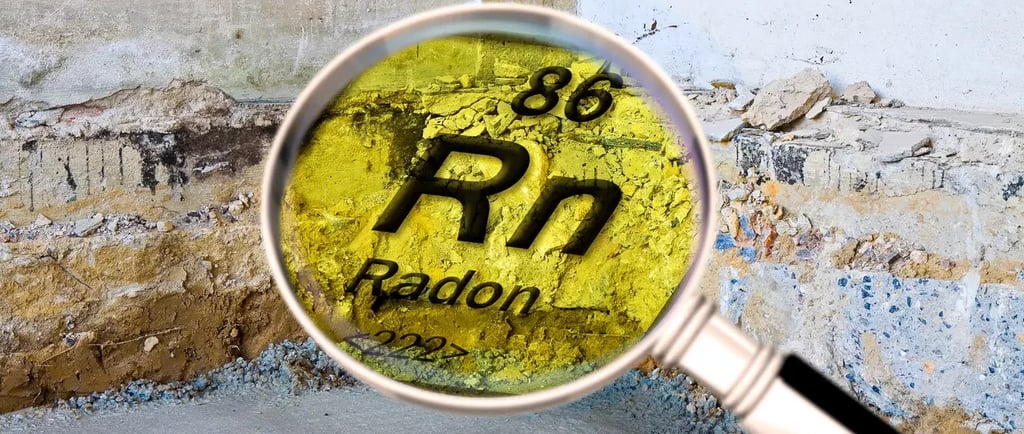
Radon is a naturally occurring radioactive noble gas formed by the decay of uranium in the soil, which can migrate into buildings through the ground. It is invisible, odorless, and tasteless – which is exactly why it is often underestimated. In fact, after smoking, radon is the second leading cause of lung cancer. Scientific studies show a clear statistical correlation between indoor radon concentration and the risk of developing lung cancer. This risk increases by approximately 16% for every additional 100 Bq/m³ of radon concentration. The risk becomes even more critical when combined with other factors such as tobacco use.
Radon in Italy
In Italy, the topic is becoming increasingly relevant from both a regulatory and societal perspective. A key legal basis is the Legislative Decree of 31 July 2020, No. 101, which implements the European Directive 2013/59/Euratom and defines the legal framework for protection against ionizing radiation. In addition, the National Radon Action Plan (PNAR) establishes concrete measures to reduce radon levels in indoor environments. The primary goal of this plan is to minimize long-term health risks, particularly by reducing radon-induced lung cancer cases.
Radon concentration is measured in becquerels per cubic meter (Bq/m³). In Italy, the average indoor concentration is around 70–75 Bq/m³, although many studies show significantly higher values in certain areas. According to the national plan, approximately 10% of lung cancer cases may be attributable to radon exposure. Notably, radon levels in residential buildings are often significantly higher than in workplaces – on average three to five times higher. This is mainly due to longer exposure times at home and reduced ventilation, especially at night.
Note: The actual number of illnesses and deaths caused by radon is likely significantly higher, as radon testing is not always conducted. Furthermore, when individuals are smokers, lung cancer cases are often attributed solely to smoking, even if radon played a significant role. This means that the real number of cases is underestimated.
Legal limits and measures
The legal framework defines clear reference levels above which corrective measures are required. For existing residential buildings, the reference level is 300 Bq/m³, while for new buildings – especially those constructed after 31 December 2024 – it is reduced to 200 Bq/m³. For workplaces, the reference level is also 300 Bq/m³. It is important to understand that these are not “safe” levels, but thresholds above which exposure is considered unacceptable. The underlying principle is optimization, meaning that radon levels should be reduced as much as reasonably achievable, taking into account technical, economic, and social factors.
A key component of the PNAR is the identification of so-called “priority areas”, defined as regions where at least 15% of buildings exceed the reference level of 300 Bq/m³. In these areas, targeted actions such as monitoring, measurement, and remediation are required. The plan also sets concrete reduction targets: at least 50% of buildings with radon concentrations above 200 Bq/m³ should be addressed, with priority given to those with the highest levels. The same applies to public buildings and the overall housing stock.
Another important aspect is the long-term perspective: the health effects of radon, particularly lung cancer, may take decades to develop. The latency period can be up to 35 years, making preventive measures today essential. The plan also highlights that energy-efficient renovations must always be considered in conjunction with radon protection, as increased building airtightness can lead to higher radon accumulation if no mitigation measures are taken.
From a construction perspective, radon primarily enters buildings from the ground through cracks and gaps in foundations, slabs, basement walls, or service penetrations. Therefore, waterproofing systems play a crucial role in both prevention and remediation. An effective solution is to prevent radon ingress at the building envelope, for example through internal waterproofing systems that also protect against moisture and pressurized water. Especially in existing buildings, this approach offers a major advantage by avoiding costly and invasive external excavation works.
In conclusion, radon is an invisible but significant health risk that will continue to gain importance in the coming years, both from a regulatory and real estate perspective. The Italian National Radon Action Plan provides a clear strategic framework and highlights the urgent need for action, particularly in existing buildings. For property owners, investors, and renovation companies, this represents not only a responsibility but also an opportunity: by implementing targeted radon mitigation and waterproofing measures, it is possible to protect health while sustainably increasing property value.
AI generated
CONTACT
info@duracrista.com
+39 375 1457731
© duracrista 2026. All rights reserved.
Duracrista GmbH is the exclusive licensee for ISOKRISTALL products in the Italian market and, together with the licensor 1a Gebäudeabdichtung GmbH, stands for quality, innovation and reliability.
In addition to the ISOKRISTALL product range, Duracrista GmbH also offers IZONIL products and high-quality ventilation solutions.
Thanks to exclusive partnerships, Duracrista GmbH benefits from unique special conditions in all countries and regions, which are available exclusively to Duracrista customers and partners. Besides Italy, Duracrista GmbH also serves customers and partners in Germany, Austria and Switzerland.
+49 151 61280359
AI is used on this website to generate content.